In Memoriam: Michael Leathes
(June 5, 1948 – August 14, 2024)
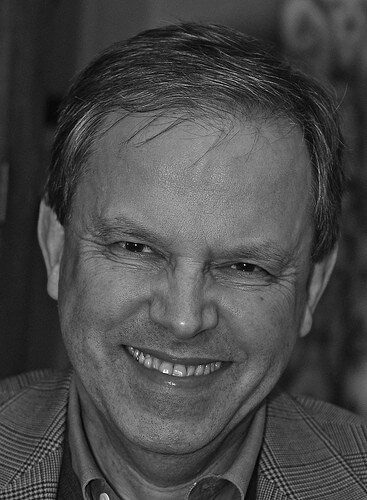
Welcome to the page where we honour the memory, life, and work of Micheal Leathes.
In collaboration with local and regional mediation institutions and leaders whose work was influenced by Michael, we provide this space for the dispute resolution community to share their thoughts, memories, and messages of condolence.
Humbly aware that no institution alone can do justice to Michael’s legacy, and led by his concept of mediative leadership: maximizing the value of relationships; partnering among stakeholders; and achieving the outcomes that will benefit all, we are creating a joint memorial page that honours his memory, where contributions and testimonials from around the world can be posted.
Voices of Appreciation.
“Farewell Michael. One of the Finest Men I ever met.”
“Michael was a remarkable leader in the field of mediation, whose vision and dedication continue to shape the way we approach dispute resolution today. His tireless efforts to promote high standards, transparency, and collaboration in mediation have left a…”
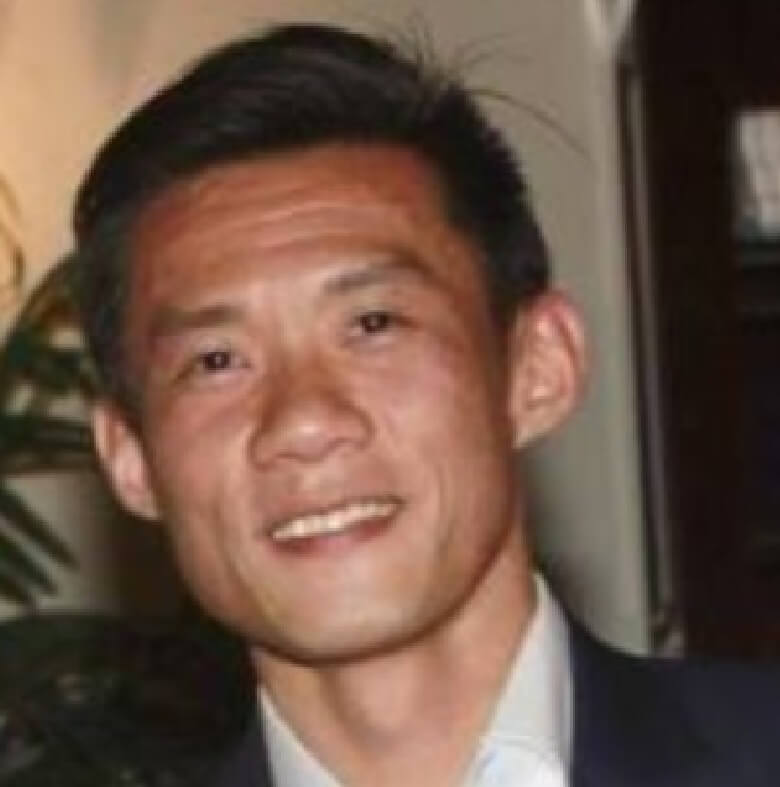
“So much was Michael at the root and in the heart of the International Mediation Institute IMI and its people. I’m sure he will be so forever. We praise the great efforts Michael made for IMI, for mediation and for other forms of dispute resolution on an i…”

“The entire mediation community, and we at IIAM and APCAM, express our profound sadness at the demise of Michael Leathes, a legendary figure in the field of mediation. In July 2007, Professor Jim Coben of Hamline University, USA, introduced me to Mr. Micha…”
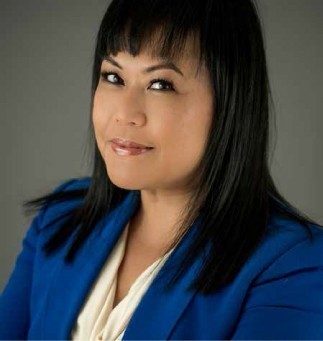
“Michael was an extraordinary man who taught me to look at everything from different perspectives. He inspired my complete way of thinking and always challenged me to get outside my comfort zone. He was full of ideas and energy but presented these with cha…”
“In reflecting on Michael’s passing, I find myself remembering the moments shared with him. There was that memorable boat tour in Singapore with Jeremy and Francois, where we admired the beauty of the bay while discussing how wonderful it all was. It was a…”
Legacy & Impact.
We publish here Michael’s obituary, shared by his family:
At 8.30am on the first day of the 1965-66 Academic Year, Michael Leathes, aged 17, led his first Morning Assembly for the pupils at his school as the new Head Boy. After the routine announcements, he informed the pupils that corporal punishment – teachers beating pupils with a cane or ruler if they transgressed – would cease immediately and permanently. Corporal punishment was widespread in UK schools at the time, and remained legal until 1986.
The new Headmaster, on his first day in post having transferred from another school, and all the teaching staff, were flabbergasted when the news spread within minutes. The Headmaster summoned Michael to his study. Who authorised this announcement? and Why did you do it? Michael’s answers were: “No one”; and “I had to redress a wrong”. The Headmaster took his time responding, perhaps reflecting on the school’s motto, drawn from Juvenal’s Satires in 2AD: Quis custodiet ipsos custodes? – Who guards the guards themselves? When he spoke, he said he intended to introduce many changes, including stopping the beatings, finally adding: “Michael, we will get on much better if you please talk to me first on all important matters”. Nothing more was said. Corporal punishment at the school had come to an abrupt end.
Michael Stanley Leathes was born in Cambridge on 5th June 1948, the first of three children to Cyril Leathes and Marja Miskiewicz. Cyril, a Cumbria-born solicitor and British Army Major, had been appointed a War Crimes judge in Cologne as the War ended. Marja, a 23-year old Polish refugee, newly released from a Nazi prison camp in Cologne, was recruited as an interpreter in the military tribunal. Their relationship somehow blossomed in a place echoing with tales of brutality and inhumanity. By late 1946, Cyril had joined a privately-funded venture led by Professor John Hilton at Cambridge University that offered the British public a free legal advice service, the precursor of the state-funded Legal Aid system. Marja came to the UK under the British Resettlement Scheme, joining Cyril, who lived on a houseboat on the River Cam. They moved out of the city after Michael’s arrival, eventually settling in the village of Harston.
In 1967, Michael was accepted on a law degree course in Manchester. On a visit home to Harston one Christmas, Michael met Annette van der Kleij, who had come from Holland to stay with the neighbours to learn English. They got on so well that Michael was invited to spend his 1969 summer vacation on the family’s bulb farm in Wassenaar, near The Hague. They became engaged that summer, an occasion Michael compared to winning the global lottery jackpot at his very first attempt. In 1970, Michael graduated with his law degree and was Called to the Bar of England & Wales, having pursued both courses simultaneously. He and Annette were married in 1971. Months later, with Annette’s encouragement, Michael enrolled on a one-year LL.M Master of Laws course in European Laws at Exeter University. Annette got a temporary job at Exeter City Library, earning enough to support them while Michael studied.
In 1972, the UK became a member of the Common Market and Michael, armed with his newly-minted LL.M, joined the European Legal Department of The Gillette Company in London. There he cut his teeth in litigation, joint ventures and intellectual property throughout Europe.
In 1979, following the births of Femke (1975) and Tom (1978), Michael was offered the role of Legal Director of Pfizer Europe in Brussels and the family moved to Belgium. Michael coordinated the enforcement of Pfizer’s patent rights against violators in Europe. At one point he led what was then the largest litigation programme in the global pharmaceutical industry.
Gregor was born in Brussels in 1982. Two years later, Pfizer promoted Michael to International General Counsel at the company’s New York City headquarters. The family moved to Chappaqua NY, an hour’s train commute from Grand Central Station. It was a stressful time as the job, in those pre-internet days, entailed travel out of the US for over 60% of the time. In 1987, they decided to return to the UK to try and find a better work-life balance.
As a stepping stone, Michael served as the first Secretary General of a new European trade association, now called Animal Health Europe, established in Brussels by Pfizer and other companies to lobby for the international veterinary pharmaceutical industry at the EU institutions. The family settled in Wokingham, UK where the children enrolled in schools, and Michael commuted weekly to and from Brussels. So much for the work-life balance, but it was best for the children’s education. Michael’s tasks included suing the European Commission for banning use of five veterinary hormones in beef agriculture despite overwhelming scientific evidence of their safety and efficacy. He considered it important to set a precedent that provably safe, effective products cannot be outlawed only because their use was politically undesirable. Michael and toxicologist Dr Martin Terry wrote The Hormone Scandal, a book exposing the detailed facts. Threats to sue them for libel never materialised, as their revelations were all true.
Michael joined International Distillers & Vintners IDV in London in 1989 as Group Legal Director. From 1990, he made many trips to Russia to help build relationships in the alcoholic beverage sector. During this time, he took a mediation training course in the US to help develop his negotiating and dispute resolution skills. After 7 years, before IDV merged with Guinness to become Diageo, Michael moved to BAT, then the world’s second-largest trademark owner, to lead Batmark, a subsidiary that managed BAT’s worldwide intellectual property (IP) rights. He negotiated a joint venture with Ford Motor Company to develop a novel software system to manage both companies’ patents, trademarks and copyrights, which they called Anaqua. After selling it to private equity, Anaqua became the world’s most-used IP management system.
Michael took early retirement in 2006, looking forward with Annette to travel and, in due course, enjoying their close involvement with their three children and eventually six amazing grandchildren. Professionally, he created the International Mediation Institute IMI in The Hague, backed by the American Arbitration Association, General Electric, Shell and others. Its aim was to promote mediation and set global professional practice standards for mediators. He led the IMI unremunerated for 8 years. In 2014, the Chief Justice of Singapore invited Michael to join a small International Working Group to propose initiatives that would enable Singapore to become a world-leading centre for mediation. Michael drafted the Working Group’s recommendations, all of which were accepted and implemented by the Government. Singapore is now the pre-eminent mediation forum and professional standards setter in Asia and beyond.
Michael served for 8 years as the initial Chair of the SDRA, a new residents association for the neighbourhood where they lived in Wokingham, successfully preventing developers ruining the rural character of this part of the busy market town. In 2015, Michael stepped down from the IMI Board to write a book he entitled “Negotiation – Things corporate counsel need to know but were not taught” (Wolters Kluwer, 2017), believing that lawyers should learn to be far less rights-based, positional and legalistic when negotiating. In 2024, Michael helped the 44 leaseholders at his late mother’s over-55s apartment building to claim compensation for what they considered unfair acts by the housing association that previously owned the building’s freehold. In these and various other initiatives, Michael got involved for one main reason: he felt that he might just be able to help to “redress a wrong”.
He was heavily influential in the Working Group which gave a set of recommendations to develop Singapore into a centre for international commercial mediation, including recommending the setting up of the Singapore International Mediation Centre (SIMC) and the Singapore International Mediation Institute (SIMI), where he served as the Founding Co-Chair.
Other notable projects were the Global Pound Conference (GPC) (2016-2017) and the Seven Keys to Unlock Mediation’s Golden Age (2020) within which he called for forging a user-driven vision for mediation.
Michael´s book “Negotiation: Things Corporate Counsel Need to Know but Were Not Taught” (2017) focuses on the negotiation of better deals and settlements from an in-house lawyer’s perspective. Although written especially for corporate counsel, this book on negotiation is universally applicable across all professions and fields of practice. For more information please go to www.michaelleathes.co.uk. Insights on the book may also be accessed on Kluwer Mediation Blog, penned by Michael McIlwrath, IMI Honorary Board Member.
He was a prolific writer and thinker, and his many articles, such as the classics “Stop Shovelling Smoke! Give users a classic definition of mediation” and F=T(Q+II) have been published on IMI’s website, mediate.com and Kluwer Mediation, with classic endurance. Please see below “Mobilizing meditatively”, The Seven Keys to Unlock Mediation’s Golden Age Epilogue, co-authored with Manon Schonewille.

Michael Leathes was a prolific writer and thinker.
His many articles, including classics such as “Stop Shovelling Smoke! Give users a classic definition of mediation” and “F=T(Q+II),” have been published on IMI’s website, Mediate.com, and Kluwer Mediation.Among his enduring works is “Mobilizing Meditatively: The Seven Keys to Unlock Mediation’s Golden Age – Epilogue”, co‑authored with Manon Schonewille.
Thank you, Michael, for your extraordinary contributions to the mediation world!
Sign a petition.
As in-house counsel in leading international corporations, Michael was a frequent user and advocate of mediation services. After retiring in 2007, he had an instrumental role in the establishment of the International Mediation Institute (IMI), where he served in a pro bono capacity as IMI’s first Executive Director, and as a board director until 2015.
He advocated for transparency and high competency standards in mediation, to ensure its worldwide uptake, and for a user-led IMI which would play a visible role in important public policy developments.
So many people have been touched by Michael’s work and kind, gracious personality. So many institutions have been built and strengthened by his far-reaching vision, which transcended borders and cultures. We trust that the sharing of our memories of Michael, his ideas, and his unique approach will further inspire us and the entire mediation community to collectively work together to advance the field and his legacy. The building of this “In Memoriam” page is a first step in doing so.
In association with: