


On February 4, 2026, the IMI International Mediation Soirée brought together leading mediators, academics, lawyers, and institutional representatives to discuss the evolving landscape of mediation during the ICC Mediation Week in Paris and online.
The International Mediation Institute (IMI), in collaboration with the Weinstein International Foundation (WIF), convened two international panels of experts to examine mediation’s growing influence as a strategic, cost-effective dispute resolution tool. The panel discussions, focusing on global standards, ethics, and the role of lawyers in mediation, were followed by a memorable networking reception at the offices of Pinsent Masons Paris, which provided an exceptional setting for attendees to exchange views and strengthen professional ties.
Opening Remarks
The event was opened by Ileana Smeureanu, Pinsent Masons Legal Director. In her welcome speech, Ileana set the tone with the words of Sandra Day O’Connor, highlighting that “the courts (…) should not be the places where resolution of disputes begins. They should be the places where disputes end after alternative methods have been considered and tried.” Reflecting on this quote, she emphasized that mediation is most effective when it is least adversarial. Recent data supports this impact, as a 2025 audit by the Centre for Effective Dispute Resolution (CEDR) reveals that early resolution through mediation can save approximately £8 billion annually, and, moreover, that since 1990, mediation has generated an estimated £64 billion in economic value through reduced litigation, preserved relationships, and improved productivity. As for the French judicial framework, mediation is deeply embedded in the procedural practice, with Paris serving as a symbolic and practical hub for mediation and hosting key institutions such as the Centre de Médiation et d’Arbitrage de Paris (CMAP), Médiateur de la Ville de Paris, and the ICC with its well-established International Centre for ADR. Ileana Smeureanu emphasized that at Pinsent Masons, mediation is embraced as a mindset, one that delivers creative outcomes through the power of dialogue.

IMI’s Mission and New Initiatives
Ivana Ninčić Österle, IMI Executive Director, welcomed the attendees and introduced the vision and mission of IMI to promote transparency, quality, and global standards in mediation. She pointed out that in a globalized market, the primary barrier to the widespread adoption of mediation is the “transparency gap” that IMI aims to address through its initiatives. She presented the analogy of a “Caesar Salad”, serving as a diagnostic tool for the issue: when European-based restaurant goers order Caesar salad expecting chicken, they will indeed get chicken in Paris, but might be unpleasantly surprised to receive anchovies in Mexico or California; and vice versa. Similarly, participants may engage in a mediation expecting a facilitative process, only to be met with an evaluative approach. Therefore, it is the duty of the profession to manage expectations and, through delivering anticipated processes, increase trust in the mediation ecosystem. IMI’s credentialing system serves to build that trust and promote transparency worldwide.
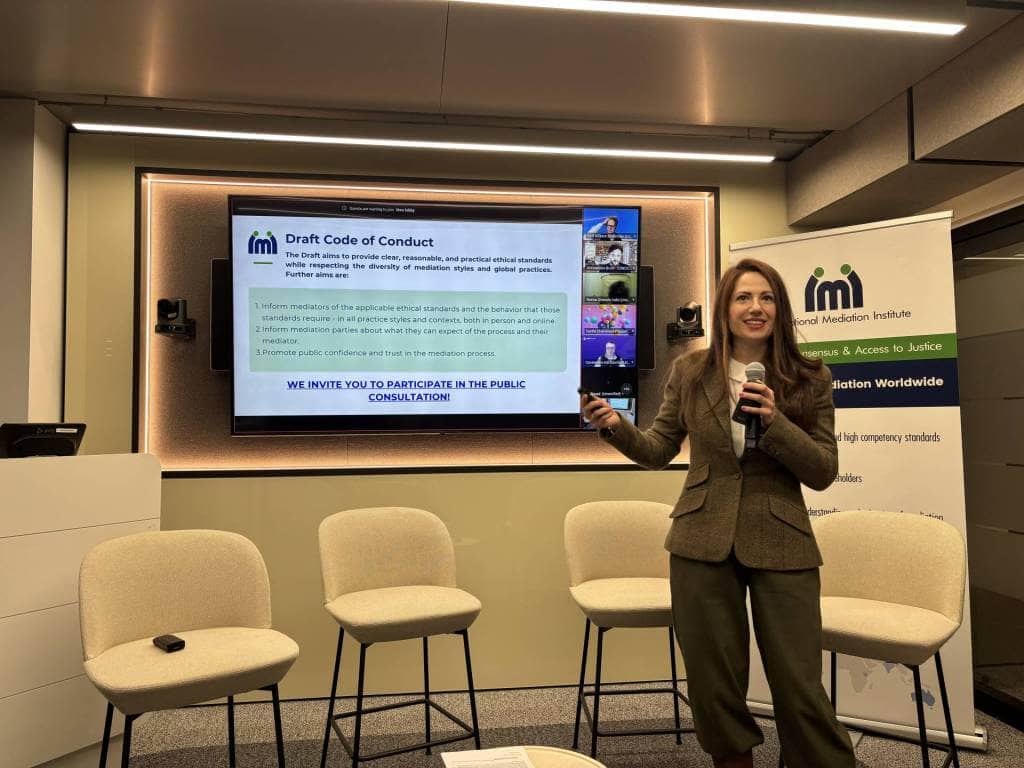
To further bridge existing gaps, IMI is executing several leadership initiatives. Within IMI’s credentialing and accreditation scheme, nearly 100 accredited organisations are now recognised, supporting both experienced mediators and newly trained practitioners worldwide. IMI is also launching a revamped digital platform this year, which will serve as a more sophisticated online tool for the mediation community to select mediators and connect with peers in the field. Additionally, Ivana highlighted that beyond the accreditation schemes, IMI is actively involved in mediation policy advocacy through, for example, its recently established Mediation Public Policy Committee, as well as its ongoing work on mediator ethics and integrity, which has exceptional importance in 2026, given the official launch of the public consultation on revising the IMI Draft Code of Conduct for Mediators.
Ivana concluded with words of appreciation for both Pinsent Masons as the law firm host and the Weinstein International Foundation (WIF) as the partnering organisation. This partnership is particularly meaningful in the year when IMI will be launching new initiatives geared towards meaningfully accelerating mediators’ careers, a mission jointly shared with WIF and programs such as the Weinstein JAMS International Fellowship and the JAMS Fellowship.


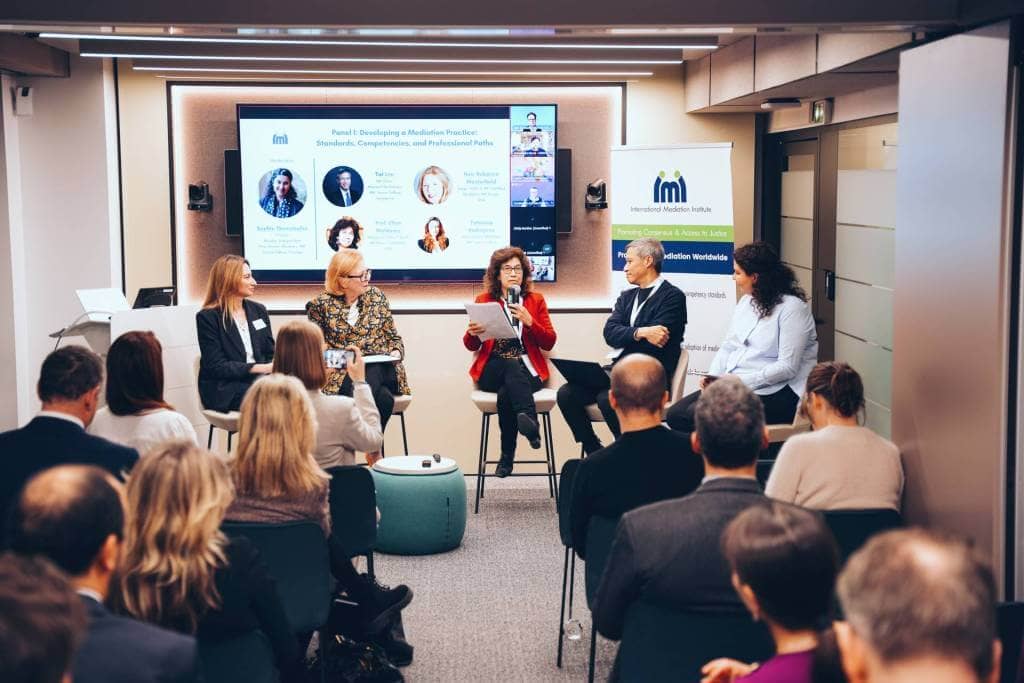
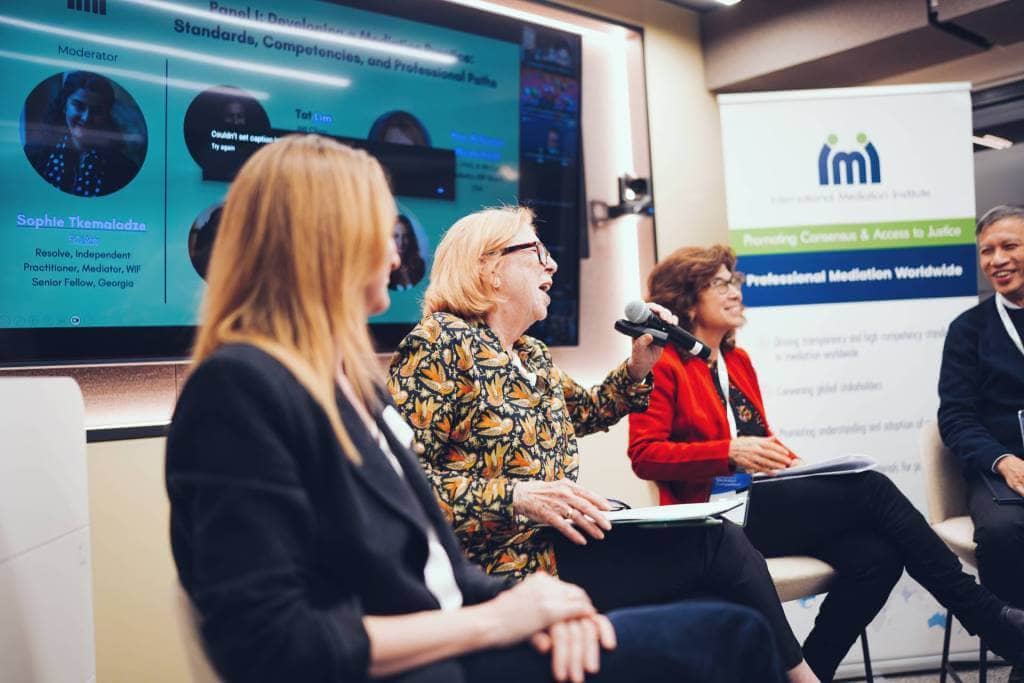
Panel I: Developing a Mediation Practice: Standards, Competencies, and Professional Paths
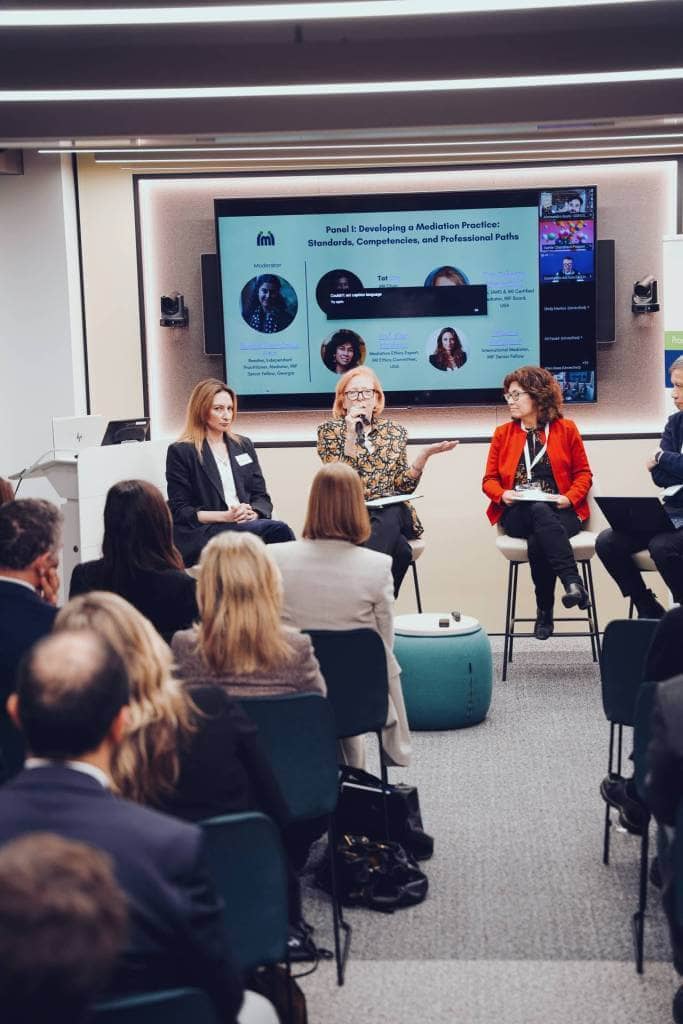
The first panel of the evening, moderated by Sophie Tkemaladze, independent dispute resolution practitioner and mediator, was joined by Tat Lim, IMI Chair, Prof. Ellen Waldman, mediation ethics expert, Hon. Judge Rebecca Westerfield, JAMS & IMI Certified Mediator, as well as Tatsiana Bialiayeva, international mediator. The panel delved into the nuances of mediation ethics, with a particular focus on the IMI Draft Code of Conduct for Mediators. Conceived as a “living, breathing document”, the panel aimed at highlighting its capacity to adapt to emerging professional challenges and shifting global standards.
Tat Lim presented the rationale for the revision and the notable innovations introduced in the new Draft. He explained that the Draft has a two-part structure, with the General Principles defining core ethical standards for mediators, and the Practice Rules providing guidance on the mediation process from onboarding to closure. It was noted that the Code is intentionally comprehensive, rejecting the brevity of a simple pamphlet in favor of a deep exploration of complex professional dilemmas. While it may not be “easily absorbable”, it serves as a rigorous, comprehensive guide for practitioners.
Impartiality, for example, has been re-defined, moving beyond the aspirational myth of absolute neutrality, and operationalizing it as the avoidance of external manifestations of bias. The Code acknowledges that mediators may utilize different interventions to support a party’s self-determination, provided those interventions are transparent and equitable. Additionally, the Code differentiates between basic and specific competence, signalling that in complex cases, process expertise alone may be insufficient. As for confidentiality, the Code lists nine exceptions, reflecting the realities of various disputes and situations.
Read the Non-binding Draft for Public Consultation: IMI Code of Conduct for Mediators (2024).
To the question of whether there is a need for separate, specific standards for lawyers when acting as a third-party neutral, Prof. Ellen Waldman answered by addressing certain obligations, particularly under the lens of the recently issued ABA Formal Opinion 518. She shared with the audience that when lawyers step into the role of a mediator, they are held to a high standard of honesty. This means, for example, that “puffing” or “blustering” about bottom lines should not take place in the mediation room. Prof. Ellen Waldman also highlighted the mediator’s proactive responsibility to provide role-clarity, especially for unrepresented parties, in order to ensure that the boundary between neutral and counsel is never blurred or misunderstood.
Hon. Judge Westerfield and Tatsiana Bialiayeva further explored ethical questions and challenges in community contexts, particularly in development, infrastructure, and environmental cases that may be different from purely B2B commercial mediations. Often mediations involving large-scale investments and local communities represent asymmetric environments, where treating “unequal parties equally” would raise ethical questions. Mediators have a duty to adapt their approach and ensure that marginalised communities can participate meaningfully in mediation. This requirement includes safeguarding adequate and inclusive representation of the affected parties, as well as reporting to local authorities in situations involving violence or intimidation. Navigating such cases, therefore, demands additional mediator competencies, such as cultural and contextual understanding, group dynamics expertise, and interdisciplinary knowledge. One such case is the CAO-IFC case Tatsiana was engaged in, initiated by complaints of cotton laborers and human rights monitors in Uzbekistan.
The panel concluded with important reflections of Hon. Judge Westerfield on the importance of “paying it forward” in the profession, by mentoring the next generation and creating mediation shadowing/observation opportunities whenever possible. She highlighted that the observer must already have demonstrated competencies and sound awareness of the mediation process as well as a need for a clear framework. Such is the JAMS Foundation Shadowing Protocol, which enables Weinstein JAMS Fellows to have valuable shadowing opportunities with JAMS mediators.
Participate in the Questionnaire for Public Consultation on IMI’s Revised Draft Code of Conduct.
We are interested to hear from you! Share any experience that has caused you ethical reflection at the mediation table using the Ethics Questions and Dilemmas form.



Panel II: Lawyers and Mediation
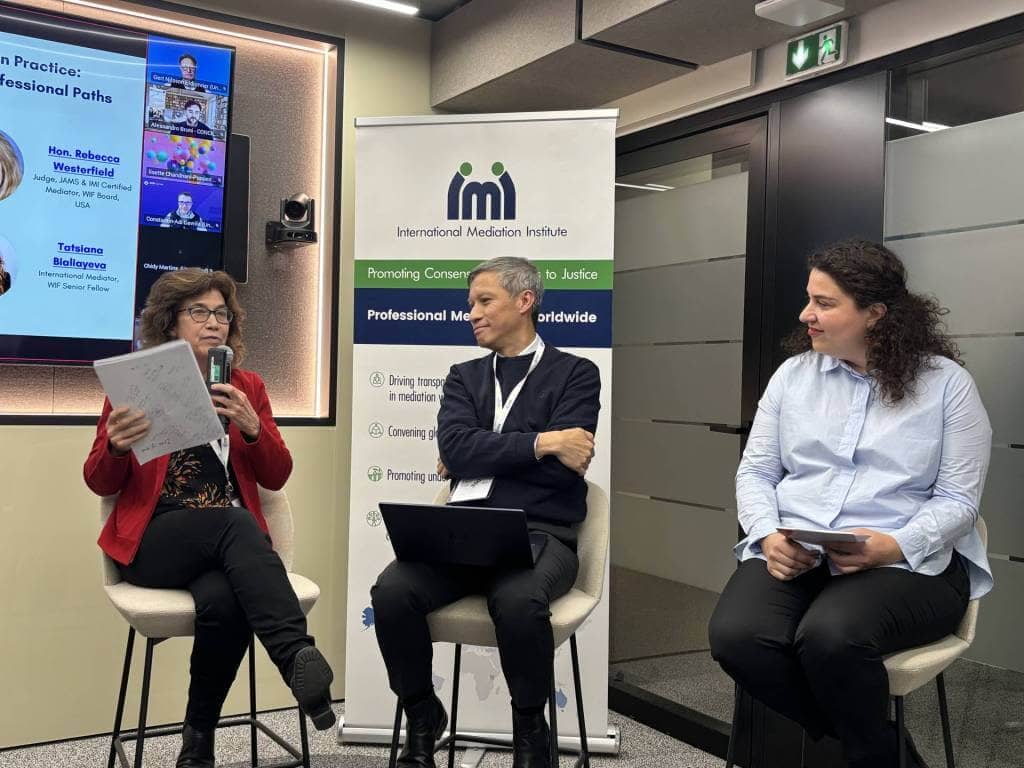
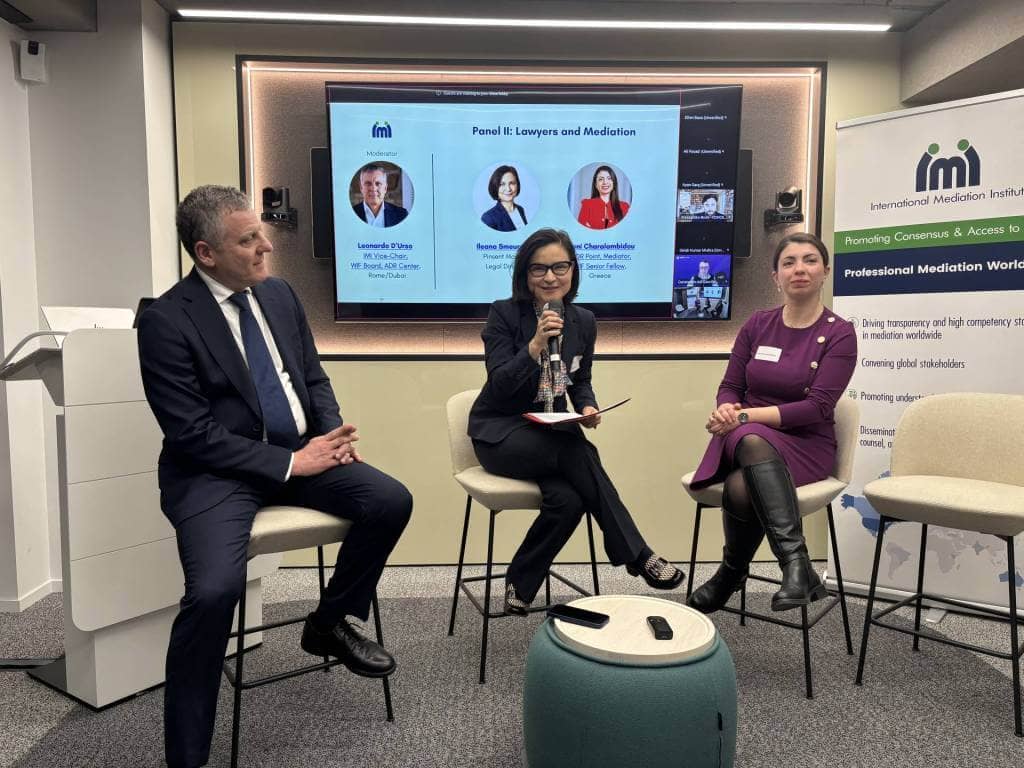
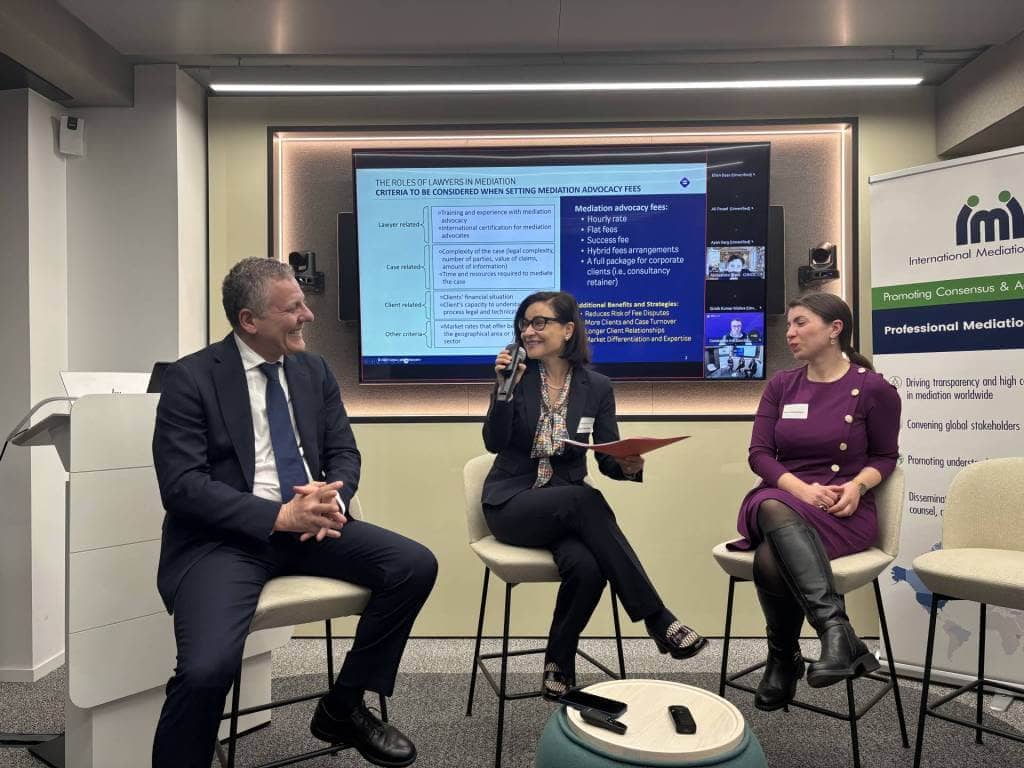
Focusing on international market trends, the second panel, featuring Leonardo D’Urso, IMI Vice-Chair, Ileana Smeureanu, Pinsent Masons, and Eleni Charalambidou, ADR Point, highlighted that promoting and stimulating mediation adoption requires a sophisticated alignment of economic interests between mediators, lawyers, and clients. The discussion explored value propositions for all stakeholders in mediation that prioritize and reward procedural efficiency alongside relationship-preserving outcomes.
With regards to the French model, Ileana shared that recent reforms have strengthened mediation’s role in the civil justice system. France has pioneered “Consensual Case Management”, empowering judges to fine parties up to €10,000 for unjustified non-participation in court-ordered mediation. Additionally, judges and parties must collaborate to encourage consensual solutions. Data from the Centre for Mediation and Arbitration Paris (CMAP) underscores the efficiency of the process: for disputes typically valued between €50,000 and €500,000, mediation settlement rates exceed 50% across a wide range of sectors. On average, these resolutions are reached in approximately 12 hours at a cost of €6,500 per case.
Leonardo highlighted that Italy’s mandatory mediation framework navigated a period of early resistance before successfully transforming lawyer attitudes through sustained exposure and structured economic incentives. A 15-year evolution has culminated in a landscape where 80-85% of mediators are lawyers, and the legal profession now serves as the system’s primary advocate. Furthermore, in Dubai, a preemptive, strategic model is being pursued by prioritizing professional readiness. By mandating specialized training as a first step for 3,200 lawyers before implementing mandatory mediation, Dubai is ensuring that the market is adequately equipped to deliver high-quality advocacy from the outset.
In Greece, as highlighted by Eleni, a mandatory mediation model similar to Italy’s has been implemented; however, it faces a significant hurdle: a persistent awareness gap. In the past, a lack of specialized training led practitioners to replicate adversarial courtroom behaviors within the mediation room. While the Greek Code of Lawyers provides for remuneration parity, ensuring practitioners receive the same fees for mediation as for litigation, many remain unaware of this entitlement, slowing broader adoption. To address this, a new EU-funded training initiative is professionalizing mediation advocacy. Simultaneously, IMI’s Mediation Advocate certification is gaining significant momentum, reinforcing the value of mediation advocacy as a specialized skill set.
In the panelists’ view, a significant barrier to mediation is the economic tension between traditional hourly litigation billing and the efficiency of mediation. Organizations have different drivers: smaller firms tend to be more responsive to mediation, mid-size firms possess the drive to innovate but often lack sufficient architectural resources to transition. In contrast, large firms often perceive mediation as a threat due to revenue structures tied to litigation. These differences require a fundamental shift in value perception, wherein professionals must move forward with innovative fee models and value-based pricing, such as fees tied to cost savings to align lawyer profit with client efficiency, or phase-based billing with fees fixed for preparation and document drafting, while reserving hourly rates for mediation sessions.





Closing Reflections
The soirée concluded with a call for continued collaboration across institutions, jurisdictions, and professional communities. The panel’s insights have reaffirmed that mediation has moved to the forefront of the dispute resolution landscape, offering faster, fairer, and more sustainable solutions for parties. Within this evolving ecosystem, the mediation community must remain attentive to upholding ethical integrity while ensuring that standards in the mediation process and specialised training become benchmarks for all practitioners.
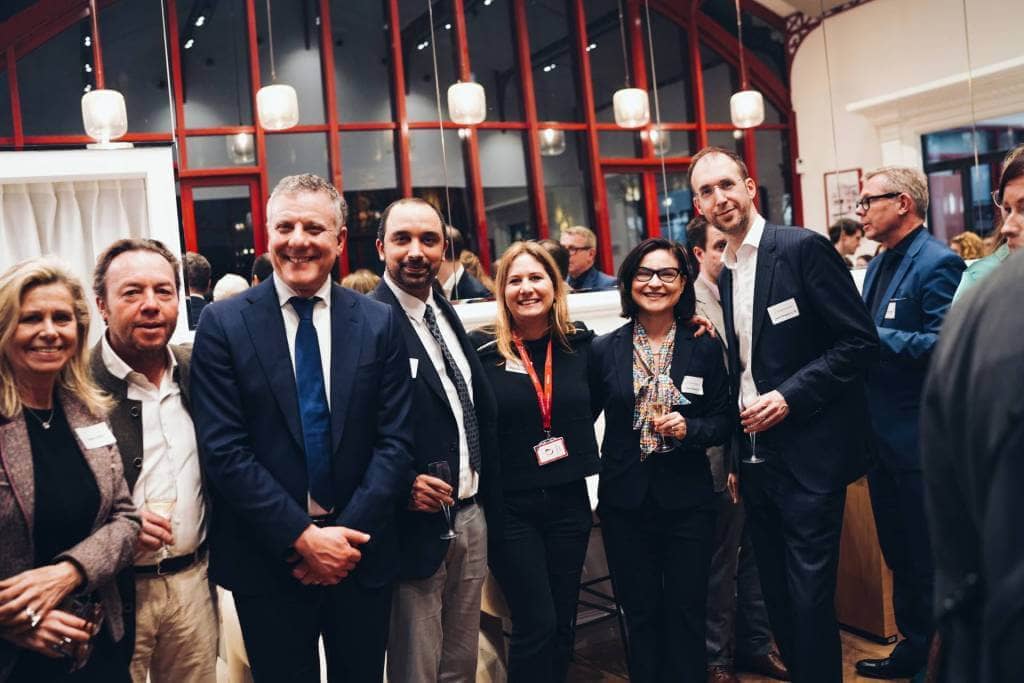





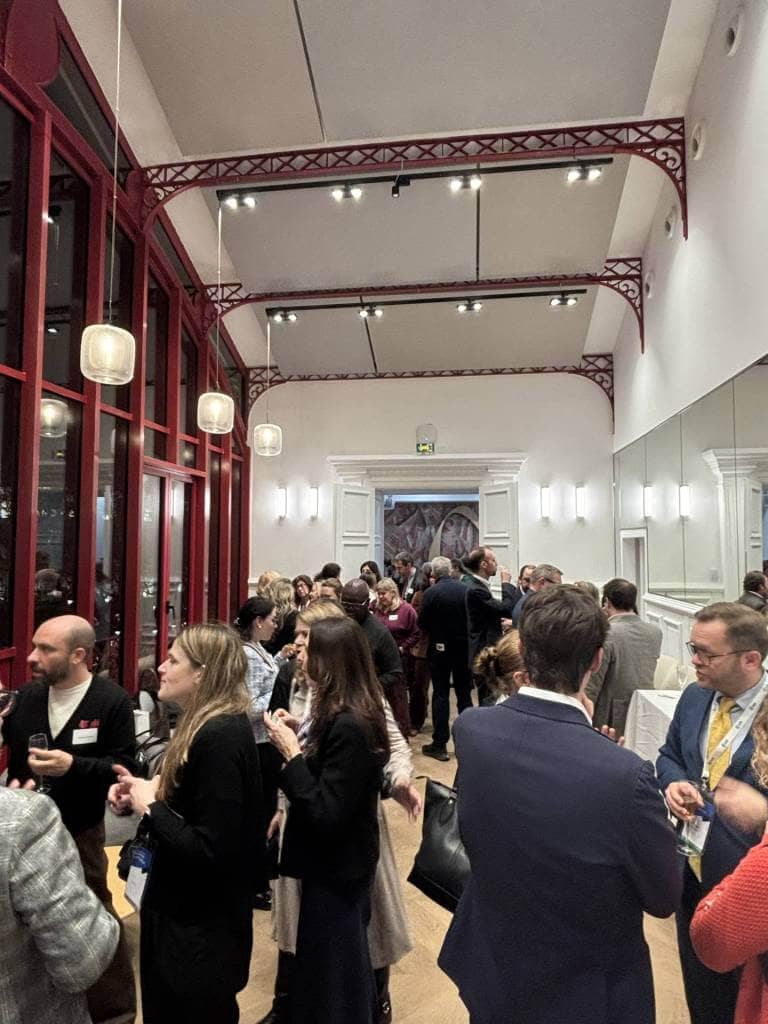
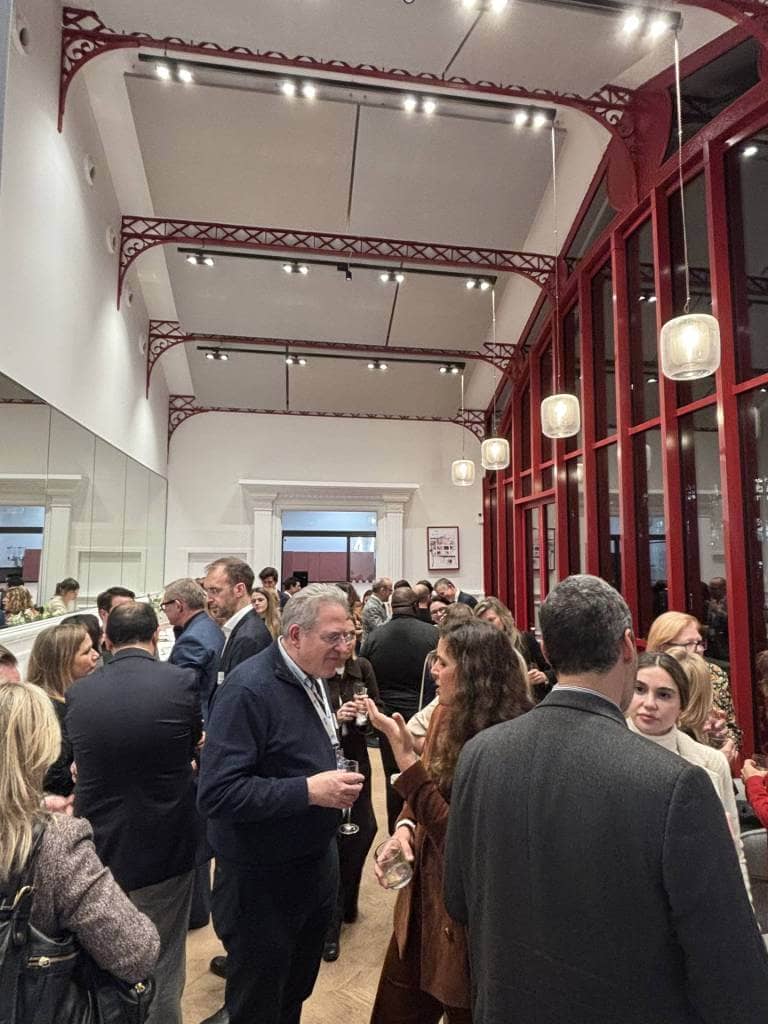
The evening ended with dual networking sessions, with Constantin-Adi Gavrila, IMI Certified Mediator, facilitating meaningful conversations for the global online attendees, mirroring the vibrant atmosphere of the in-person gathering in Paris. Building on this momentum, attendees were invited to join the upcoming milestone celebrations marking IMI’s 20th year anniversary in 2027.
SAVE THE DATE:
***
The Inaugural Maxwell Challenge 2026: The Global Competition for Mediation and Advocacy Excellence, 27-30 August 2026, Singapore, with an IMI supporting event
***
IMI 20th Year Anniversary Conference, Rome, October 2027
***
Catch the spirit of the Soirée in this short video:
📖 For a review of the material discussed, please see below the slides from the event:
Thank you for your engagement! If you enjoyed the programming, please consider donating to IMI, and support our Vision and Mission:


